
Photo Creation Guide
1 | THE PROJECT
Crash testing new vehicles is one of the most demanding processes in automotive development, both technically and financially. Every test produces critical data, and complete visual documentation is what makes that data usable. Together with TRIXIT, we delivered a comprehensive, dependable mobile application for our client, a leading car manufacturer. The brief was never simply to build what was asked. It was to create a tool that makes field work dramatically easier for technicians, removes human error, and moves sensitive data to the server securely.
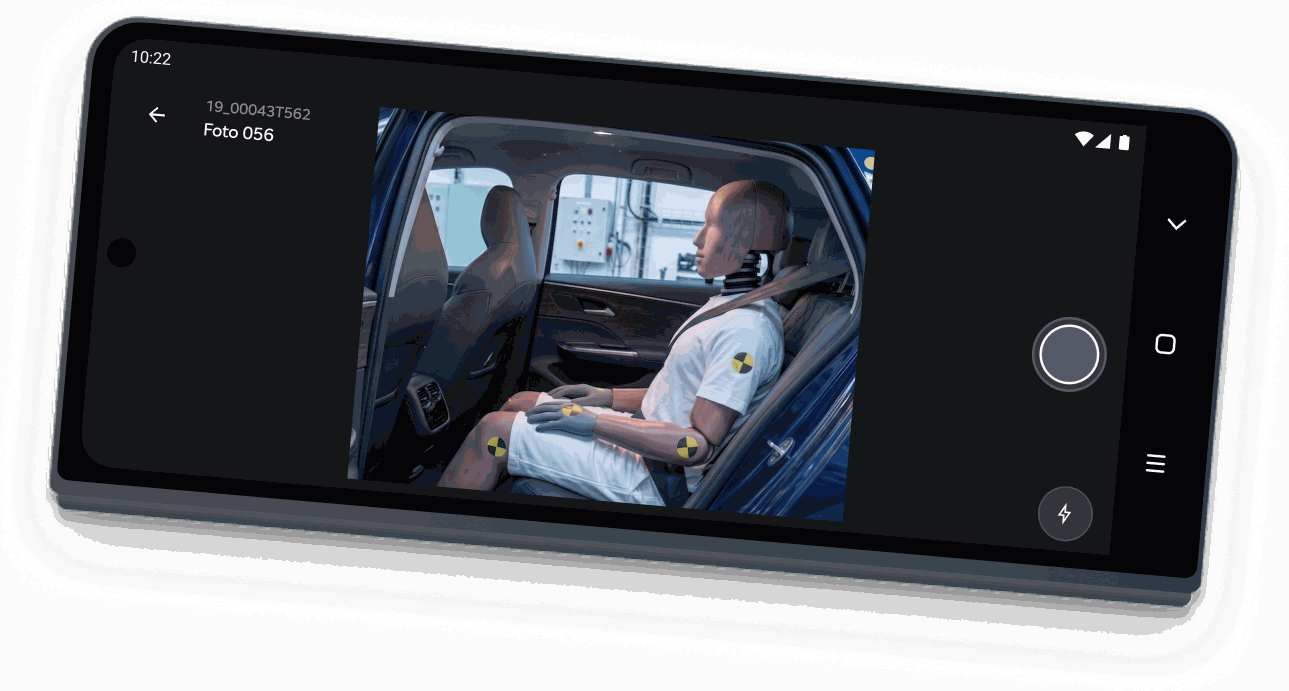
The result is Photo Creation Guide, a mobile app that walks technicians through documentation step by step and guarantees that no critical crash-test shot is ever missing.


Active specialists on the agency side (MeguMethod + Trixit).
Intensive development, from zero to handover
Tests, sensors, preparation, and vehicle assembly and disassembly currently generate an average of 6,800 photos per month at standard laboratory capacity. By the end of the year, the plan is to scale that to 15,800 photos per month with PCG.
Certainty that no shooting position is ever skipped or lost. Photo Creation Guide removes the security risks tied to local storage and the physical handling of SD cards. Every image is transferred straight from the device to secure, encrypted storage. By guiding the process end to end, the app prevents human error and standardizes documentation across the labs.
A design the lab technicians took to immediately
“The new mobile app brought modern tooling to what had been routine photo documentation. The key to the whole project was adapting the interface to the specific conditions of the laboratories and making full use of what the Samsung Galaxy Fold can do.”
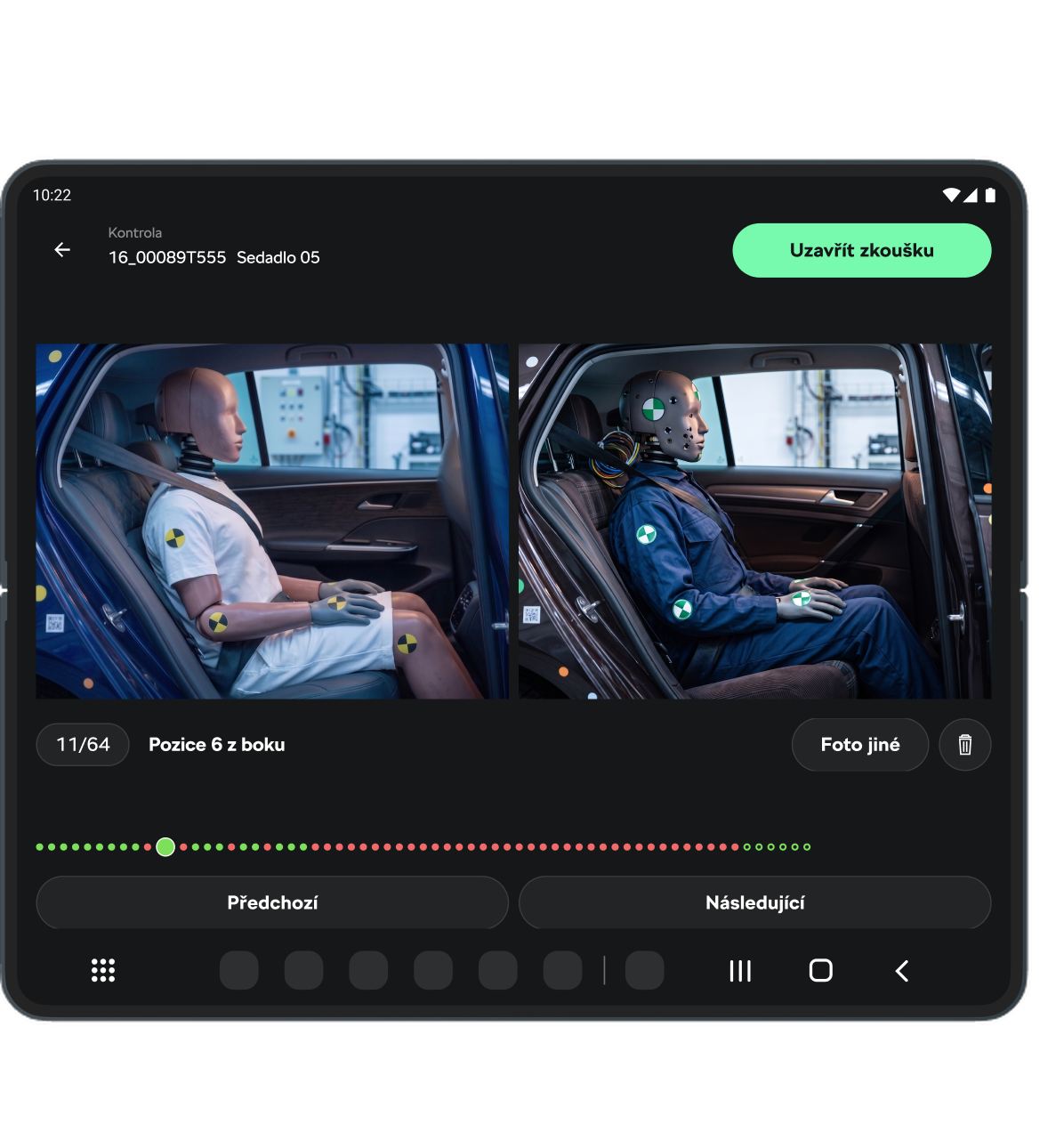
Controls and previews were designed to be operated effortlessly in the field. A software shutter, plus integration with the physical shutter on a selfie stick, removed the physical strain of capturing large volumes of photos.
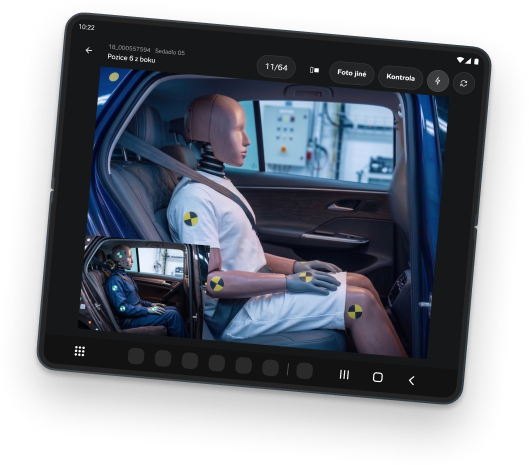
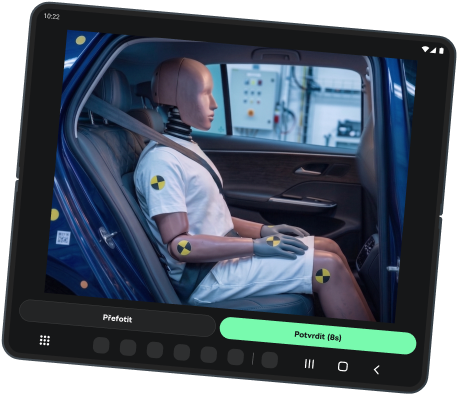
One of the most valued benefits is comparing the live preview against the catalog template directly on the large foldable display. It simplified the documentation work and eliminated errors.
Removing SD-card handling and uploading images automatically to encrypted storage turned an unpopular routine into a fast, smooth and intuitive process.
Technician of Development car safety system, car manufacturer
Built for vehicle safety development
Beyond its usability, the app also holds up technically. Development followed the car manufacturer's own standards, and the solution cleared every internal approval process without a single hitch.
The app architecture, encrypted data transfer and penetration tests all passed the security assessment with zero findings.
Strict code reviews and continuous SonarQube analysis keep the codebase at zero technical debt and maximum stability.
The architectural design and asynchronous uploads keep the app running without data loss, even where lab shielding cuts the network.
UX/UI tailored to lab technicians, combined with the technical quality of the backend, made the move to production remarkably smooth.
Technician of Development car safety system, car manufacturer
2 | THE CHALLENGE
The starting point
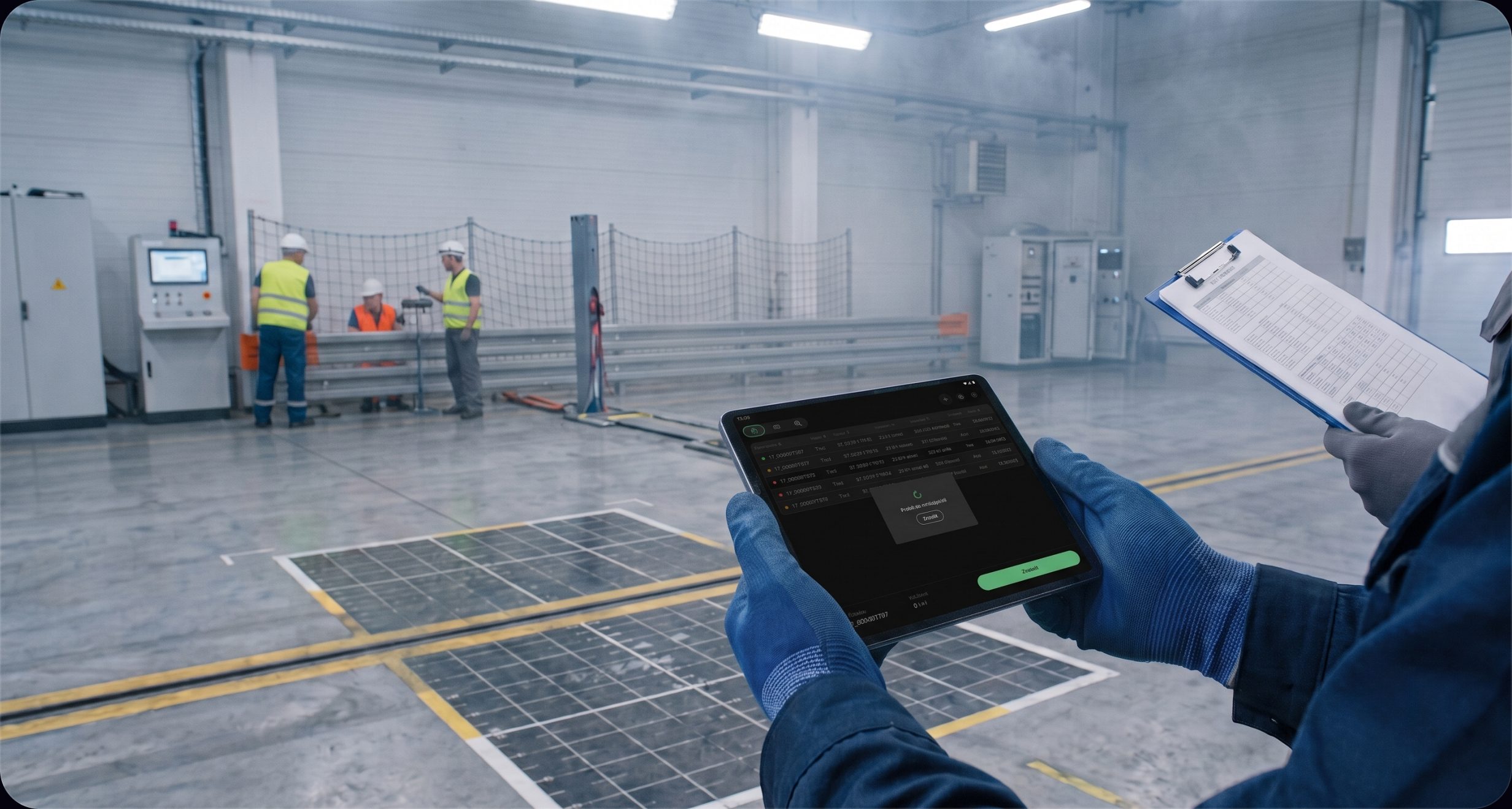
Before the app, technicians documented crash tests with conventional DSLRs. Every photo had to be pulled off the camera over a cable, then sorted and filed by hand. The real risk was human error: one missed angle or one accidentally wiped card, and critical data from an expensive test was gone. Technicians were constantly cross-checking spreadsheets and lists to know what still needed to be shot.
A complex brief
01
The UX challenge was that crash tests don't follow a single template. The app had to cover a range of shooting modes and situations flexibly, without ever becoming hard to read.
02
Photographs of prototypes are classified. Images had to be encrypted inside the app and in transit, so that nobody unauthorized can reach them outside the app and the server.
03
The design had to answer to the specific hardware of a foldable (flip) phone. The challenge was solving the unique aspect ratio and the seamless hand-off between the cover display and the main inner display while shooting.
Notable details and product insights
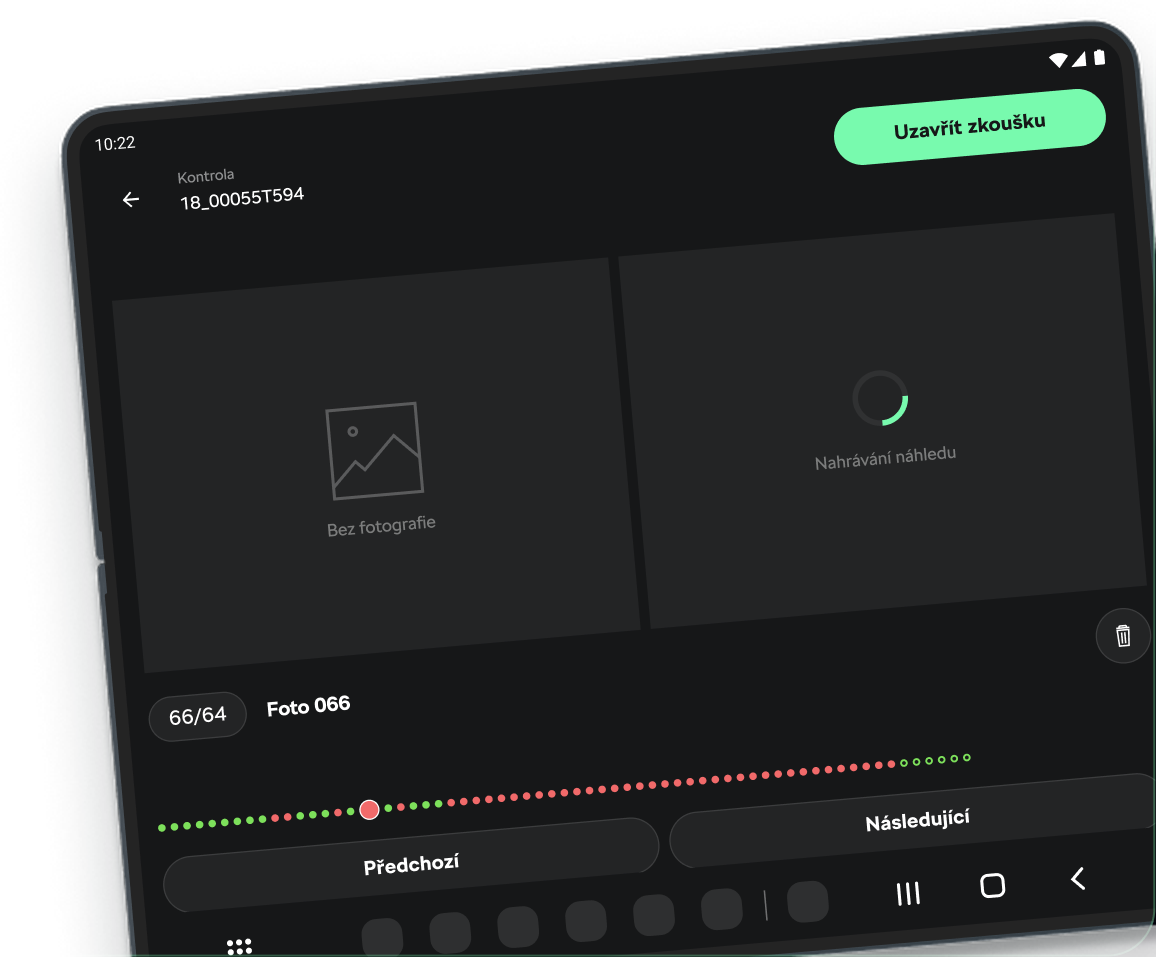
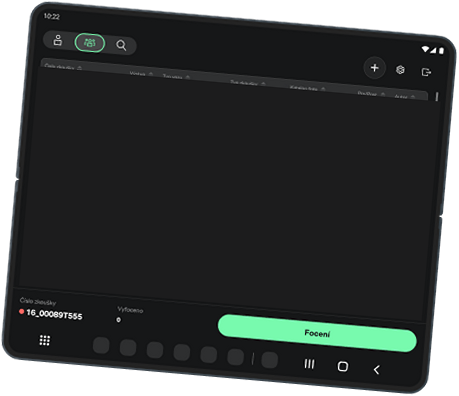
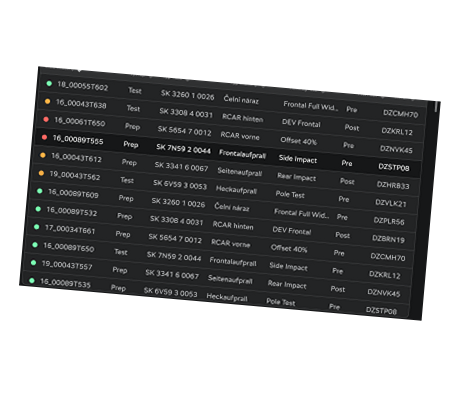
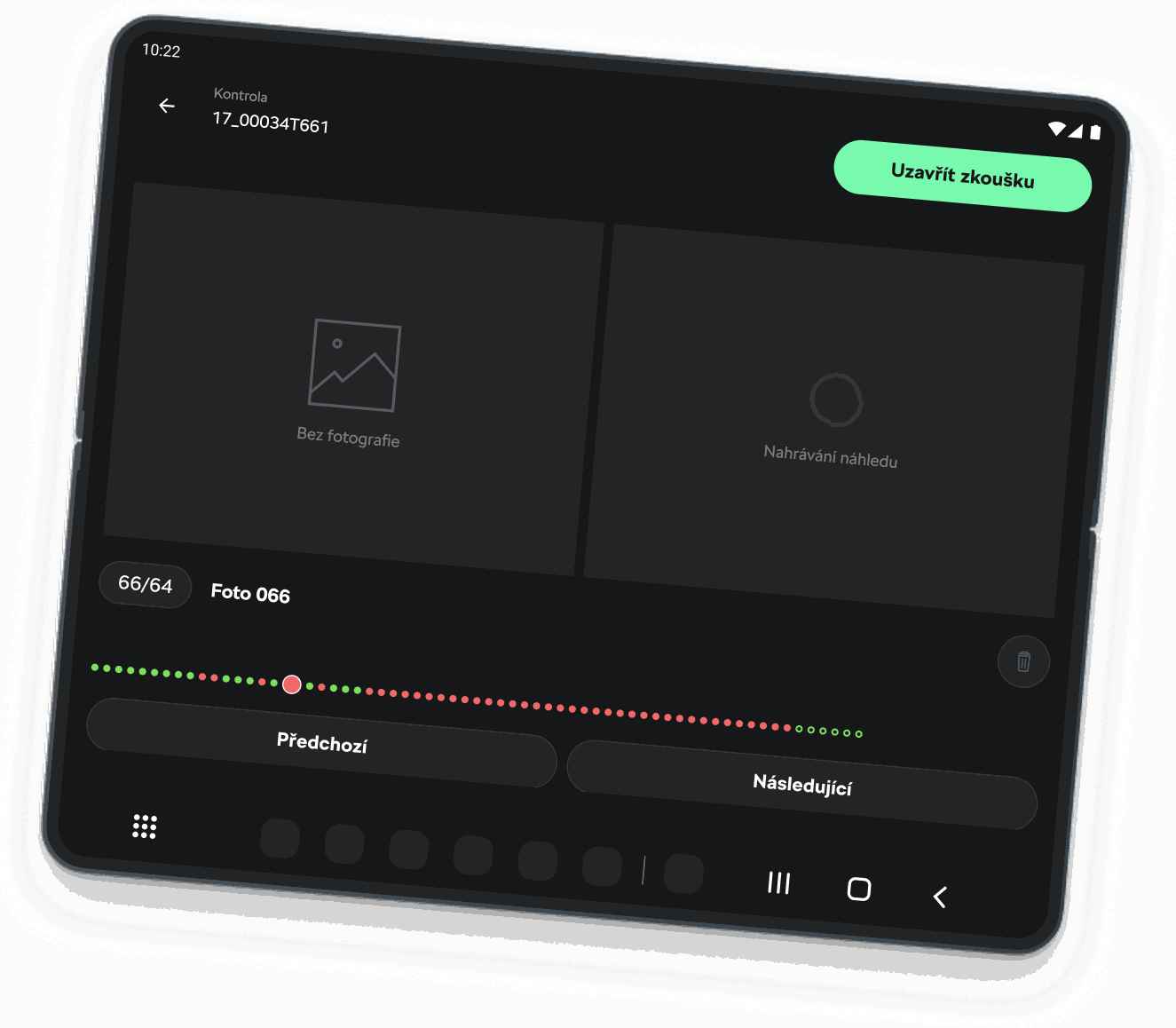
The app leaves nothing to chance. It walks the technician through the process step by step: they know exactly what to shoot at any given moment, everything sits in one place, and the app keeps guiding them until every required position is documented.
Wi-Fi and mobile signal drop out in workshops and on test tracks. So the development team built a robust offline mode. Photos are securely encrypted in the phone's memory and, the moment the connection returns, synced to the server reliably and without data loss.

3 | THE SOLUTION
Discovery and understanding the reality on the floor
We had one enormous advantage going in: the client's brief came from a team of experts who know crash-test processes in detail from daily practice. The UX/UI wasn't designed in a vacuum. It grew out of real experience and a clear picture of what technicians actually need for their work. The design went through several iterations, each presented to the client in detail. Together we then refined it down to the last detail and searched for the most efficient options for a demanding workshop environment. Designing an app for foldable phones is a fascinating experience. You have to study the format and design for two screens in parallel, the cover display and the main inner one, and solve what happens as the phone opens. The work ran smoothly, and that is largely down to the client. They gave us an incredibly detailed, well-considered brief and their own robust design system, which made iterating straightforward. We knew immediately how the product would be used in practice, and that helped us define the UX.
Karolína Stará | UX/UI Designer
Development to strict standards and rigorous testing
Instead of making quick changes on the fly, we bet on precision and disciplined planning. Development of the mobile app ran under close scrutiny and followed the car manufacturer's internal regulations. Code was reviewed continuously, and the whole process culminated in several weeks of intensive testing. The app had to meet uncompromising requirements for security and technical quality.
Part of the job was ensuring all data stayed encrypted both at rest and in transit to the server, with its integrity intact. To prove it, the app went through a penetration test, which it passed on the first attempt. It also had to satisfy the OWASP Top 10. Code quality was analyzed statically as every change was integrated through CI/CD.
Miroslav Voda | Tech Lead & Co-founder, MeguMethod
Let's build an app that matters. Starting today.
Need to digitize internal processes, speed up the people working in the field, or build a secure mobile solution at enterprise level? Let's talk.
Tell us about your project