


AppParade 37 Report: Four AI Trends That Will Start Rewriting Czech Business Next Year
2025 is a turning point for the Czech software industry. After fifteen years spent iterating on the classic “mobile app + display + buttons” model, the paradigm is beginning to break. In both client projects and startups, you can clearly see the rise of the post-screen era, autonomous agents, and “invisible” AI moving from demo toys into the core of business.


Previous years were all about playing with chatbots and saying “wow, it talks.”
This year brings a harsher reality: users are getting tired. No one wants to install their fiftieth app just to buy a tram ticket or to order lunch. AI is no longer a feature — it’s becoming the decision-making layer that determines what actually happens in a company. From how you serve customers to how you allocate budget and team capacity.
At the same time, the other side of the equation — European regulation — is beginning to shift as well, though it’s talked about far less in business presentations. The EU, which spent the last decade building a reputation as the strictest digital regulator in the world, now openly admits that overregulation is hurting competitiveness.
Amendments to GDPR and delays in parts of the strictest AI Act rules are on the way. Not to kill user protection — but to enable companies to work with AI faster and more meaningfully. The excuse “regulation won’t allow this” is slowly fading. A unique window is opening — easier than ever to build decision-making and agent systems on real data. And those who sleep through it won’t be chasing the regulator — they’ll be chasing competitors.
One of the best places to see this shift concentrated in a single evening was AppParade.
After years, we brought it back to Bio Oko — a bit of nostalgia, a bit of punk, beer instead of a polished foyer. But while nostalgia worked at the bar, the screen told a different story: a live preview of how Czech companies will work with AI in the coming years.
For me, this year’s AppParade wasn’t “just” another app contest. It was a real sample of where the Czech software & AI ecosystem stands.
From voice interfaces to invisible automation, from decisioning systems to medical moonshots. Most importantly: it revealed which directions can deliver real business impact in the next two years.
1. Voice Interfaces Are the Future — Screens Are Holding Us Back
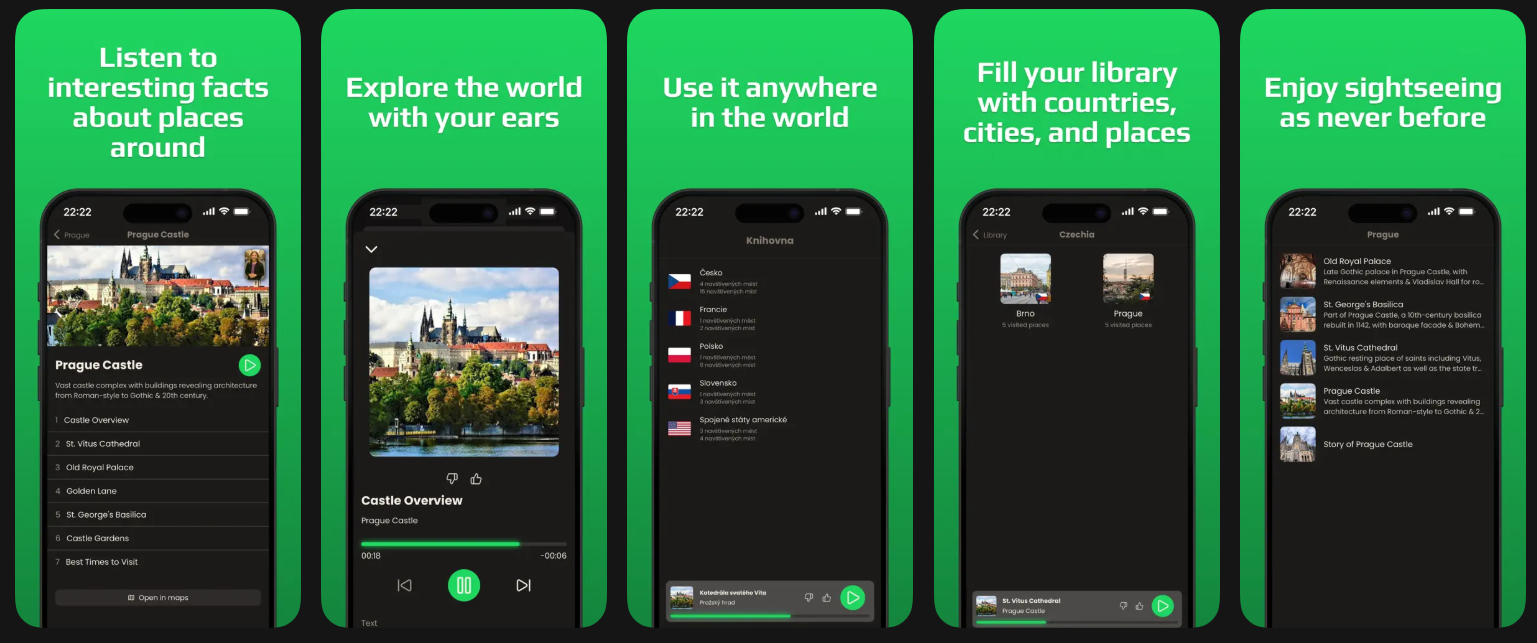
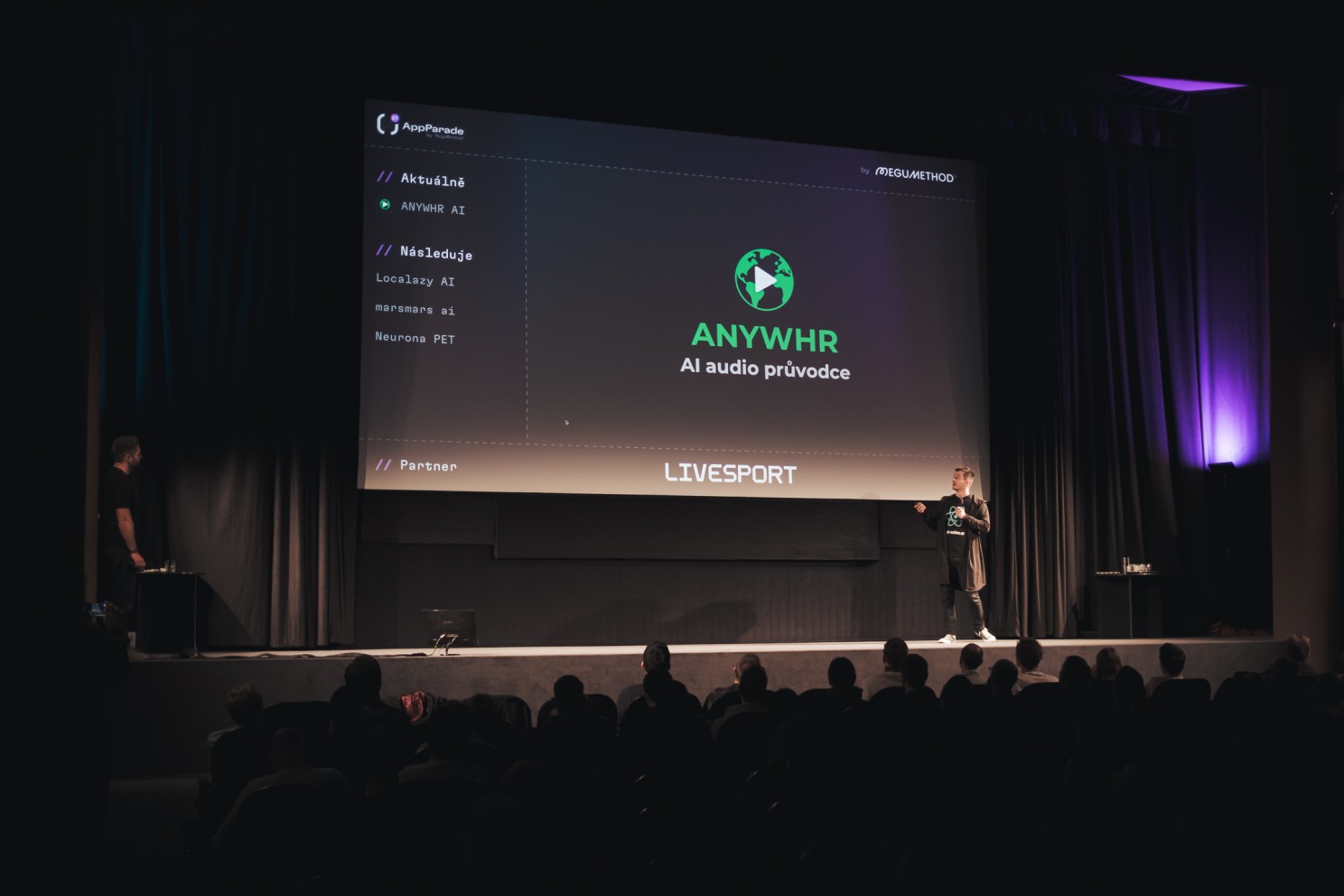
The audience picked medical projects as winners, but my hidden winner of the night was ANYWHR AI — a tourist app that doesn’t force you to stare at a phone, decipher maps, or read tiny Wikipedia text, but simply tells you stories about places around you at the moment you’re passing them.
Not another conventional guide, but a practical example of a shift that’s been echoing in Silicon Valley for months and will hit hard in 2026: Screenless Computing.
The display is suddenly a barrier. It demands full visual and cognitive attention and pulls us out of the moment.
The future lies in technology that is ubiquitous yet invisible.
Zoom out and the puzzle pieces click into place. Rumors swirl around the Jony Ive + OpenAI device, aiming to eliminate apps and screens altogether. Apple, through Siri and deep App Intents integration, is already training users that a phone is not controlled by taps but by context. The rumored upcoming integration with Gemini will only accelerate this. Add services like ElevenLabs with human-level latency and emotionally rich intonation, and it’s clear: voice interfaces are no longer a car accessory. They are becoming the new operating system.
The Business Case: Rohlík 2.0
Imagine e-commerce a few years from now.
Today’s model relies on visual search: open the Rohlík app, enter keywords, filter, scroll, tap items for 15 minutes. It’s a UX full of friction — a maze of barriers and constraints.
In a post-screen world, the interaction becomes a natural conversation. You’re driving home and simply say into your headphones:
“Order the same things as last time, but add ingredients for svíčková — my mother-in-law is coming on Saturday. And skip the milk, I still have some.”
Behind the scenes, there’s no “magic,” just execution:
The AI agent analyzes your purchase history, understands the semantics of “svíčková,” fetches the recipe, checks your inventory, and builds a tailored cart. It asks just one follow-up:
“Should I get regular beef round or the organic option?”
And here’s the key: this isn’t just more efficient UX.
Such an agent increases order frequency, simplifies repeat purchases without the need for discounts or push notifications, and raises LTV — without raising acquisition spend. Voice reduces friction from minutes to seconds.
If you’re still designing buttons, you’re designing for the drawer.
What this means for your company:
If you’re planning an app redesign, don’t start with button colors. Instead, ask:
“How will our product work without a screen?”
Design scenarios where users have no free hands or eyes — driving, cooking, walking. Voice will soon stop being nice-to-have and become a serious candidate for your primary customer interaction channel.
2. The Money Is in Invisible AI
While visionaries dream of AGI writing symphonies, billions lie in processes that are boring, not flashy, and absolutely crucial. I call it Invisible AI — intelligence the end user never sees, yet keeps the company running.
At AppParade, this category was beautifully represented by AIG MV, Účtenkovník, Localazy AI, and Valka.ai.
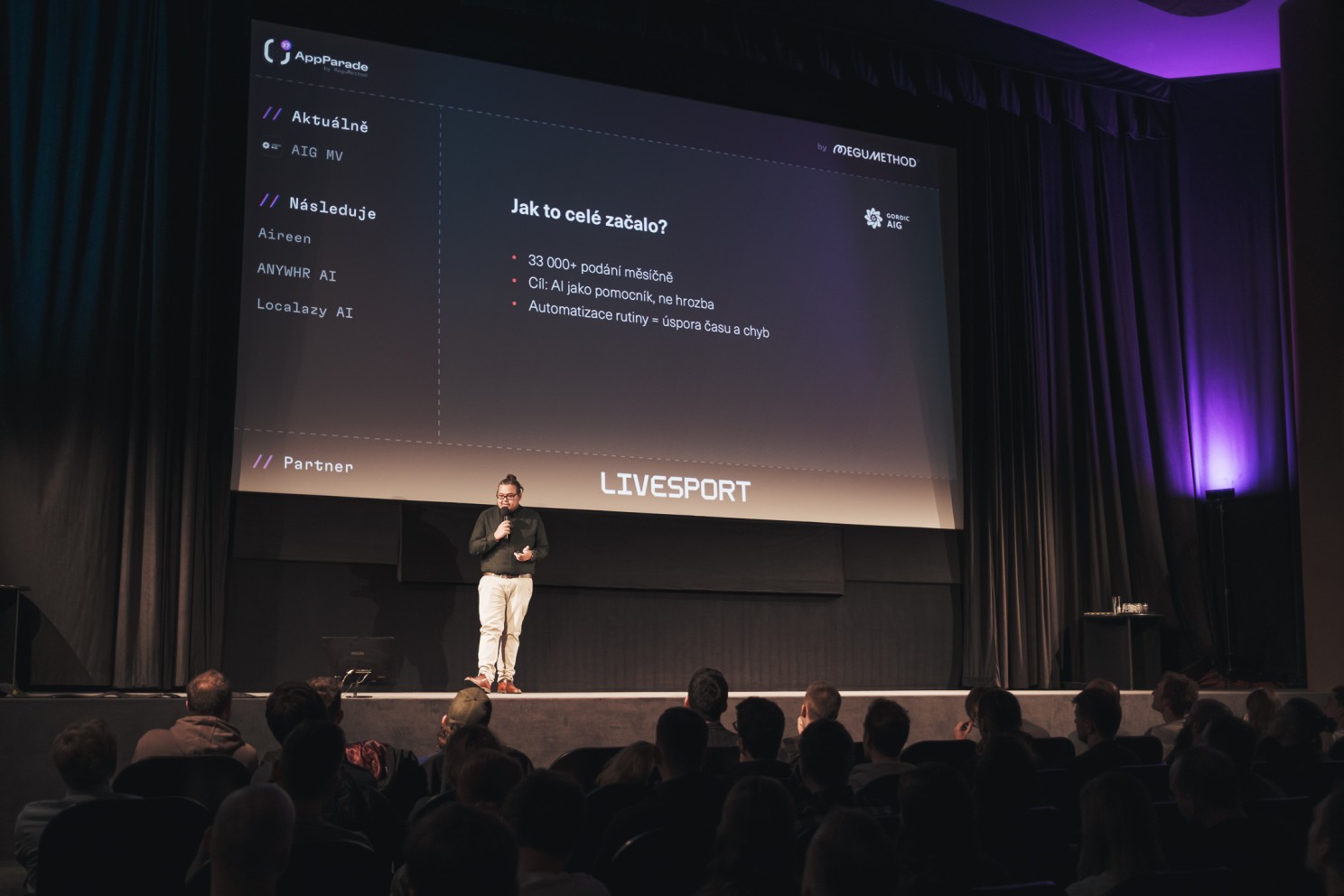
AIG MV for the Ministry of the Interior isn’t sexy. No glossy magazine will cover it. Its job is simply to sort thousands of submissions. But this invisible work saves the state thousands of hours per month and frees people for meaningful tasks.
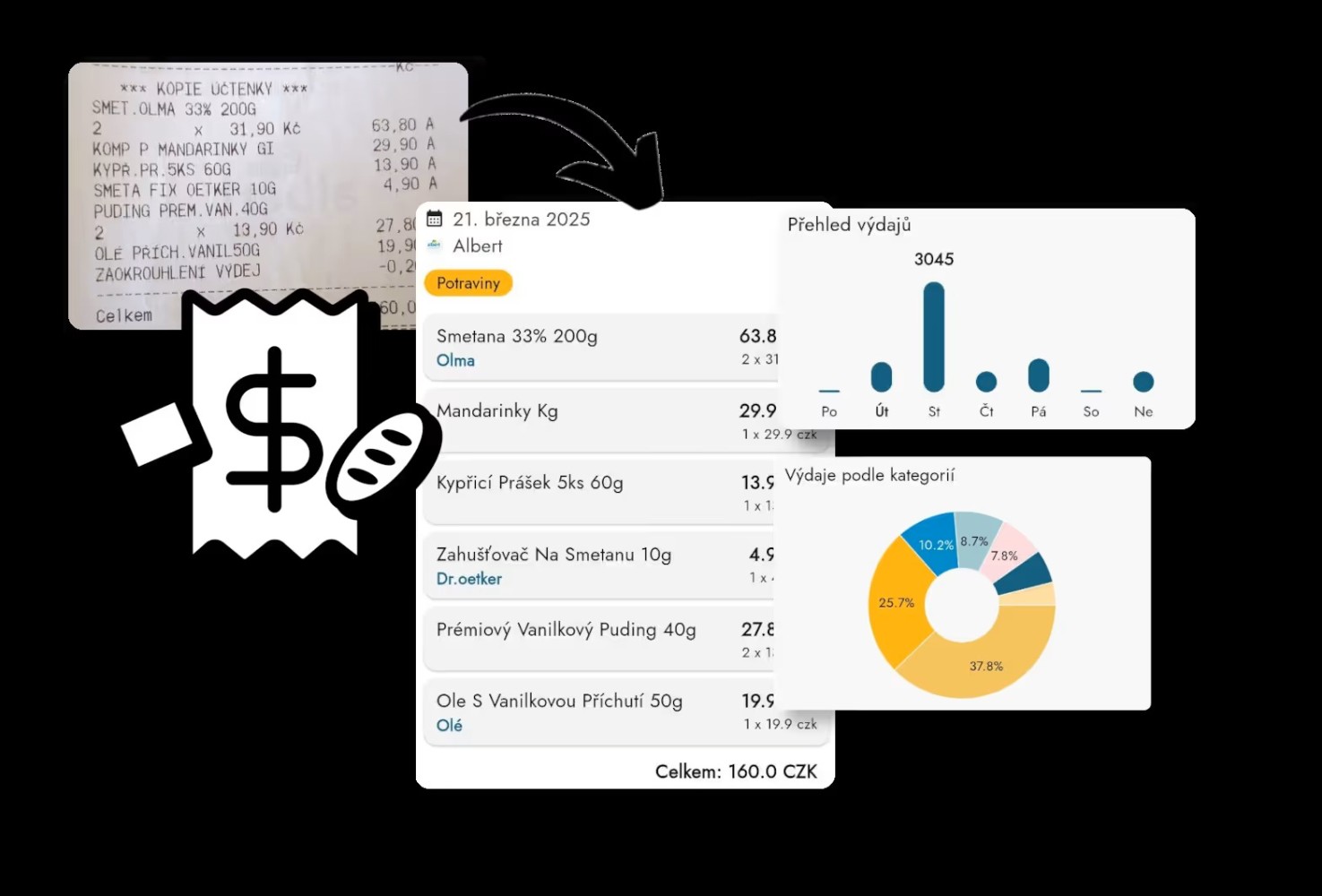
Účtenkovník does the same for receipts — digitizes them, extracts data, categorizes items, builds a product database. It’s not flashy for keynote slides, but dramatically improves daily operations. Localazy AI breaks translation barriers and gives developers price/performance unattainable with human translators. Valka.ai automates content scaling in gaming and sports.
The common denominator? Immediate savings and efficiency.
At MeguMethod, we often see companies wait for a “perfect AI robot” to solve corporate strategy — while their back office bleeds money on manually copying data from PDFs, invoice checks, or sorting tickets.
What this means for your business:
If you’re a CEO, don’t ask your CTO for a vague “5-year AI strategy.”
Ask for a list of the ten most boring, repetitive processes in the company. Turn them into your Q1 2026 backlog.
Ask:
“What can we automate with specialized models so that the ROI is counted in months, not years?”
Meanwhile, Europe is quietly softening its own regulatory rigidity. Brussels openly acknowledges that complicated GDPR and the heavy AI Act hurt competitiveness. Some rules will be simplified, clarified, or postponed.
Translation: the excuse “GDPR won’t allow this” is becoming obsolete.
Practically, building models on real data will soon be far easier — with guardrails, but without fear paralysis.
Banks can move past marketing segments into real personal finance.
E-commerce can predict demand and optimize inventory.
Manufacturing can run predictive maintenance on telemetry that used to be legally ambiguous.
In an environment where the regulator says “we want less bureaucracy and more innovation,” the biggest barrier is our own reluctance to start.
Snapshot of Czechia 2025: Between Hype and Execution
AppParade 37 reflects a typical picture of the Czech AI ecosystem:
- big visions and moonshots (especially in Medical AI),
- agile, narrow-scoped projects with fast ROI (Localazy),
- a special category of training tools (VR Academy personalizing skills in VR),
- and a middle layer of technically impressive ideas lacking real validation.
It’s a healthy mix. We’ve moved from “AI toys” into AI touching critical areas — healthcare, government, finance, sports. Yet most value in the next few years will come from blending AI into existing processes rather than building new worlds around it.
On the macro level, the story is less optimistic: Europe lags in AI — in investment, global players, and adoption. The biggest AI companies are in the US and China, while the EU built the strictest regulatory regime. Without a shift, the EU risks becoming an importer of solutions, not a creator.
For Czechia, this creates a unique moment. We’re part of a 450M-person market, have strong technical talent, and are small and pragmatic enough to try things quickly. AppParade is a micro-snapshot of how Europe could look if it trusted practitioners over paperwork.
3. Decision Intelligence: The End of Dashboard Fatigue
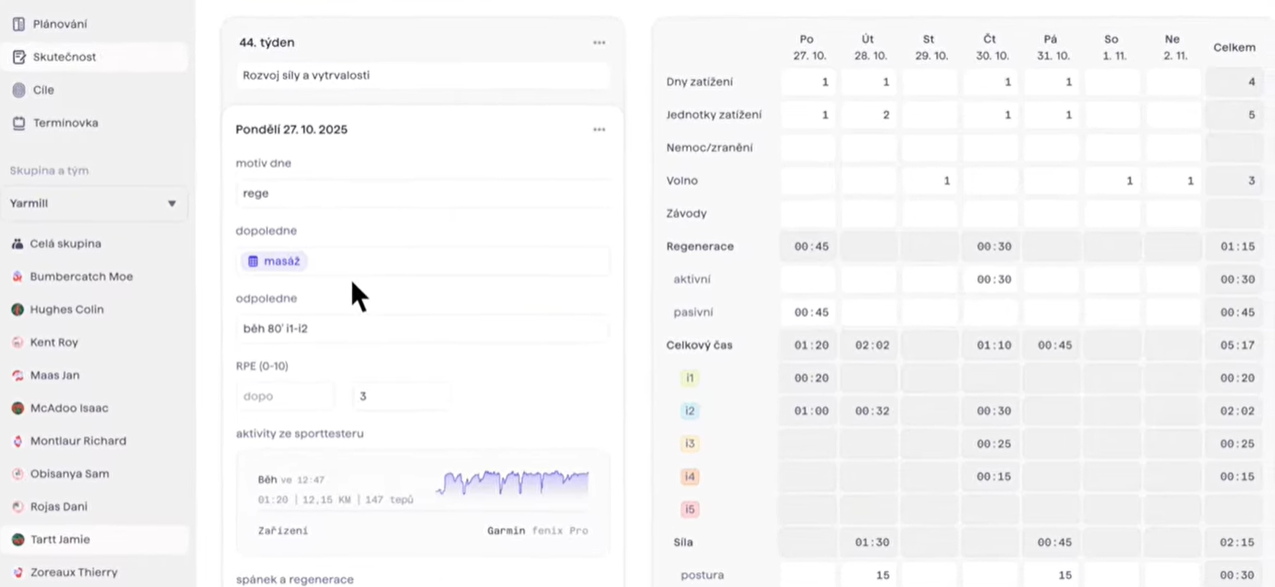
Managers today are paradoxically victims of their own data. We have dashboards for everything — but dashboards don’t tell you what to do. We suffer from decision paralysis.
Yollanda AI (sports) and marsmars (e-commerce) demonstrated a key shift that will define 2026: the move from describing reality to prescribing actions.
A top coach doesn’t need a table of lactate levels.
He needs:
“Reduce tomorrow’s load by 20% — high risk of hamstring injury in the next 48 hours.”
A marketing director doesn’t need CTRs.
She needs:
“Turn off Facebook — ROI is collapsing. Move spend to TikTok; conversions in 18–25 are rising.”
We are entering the era of Agentic Workflows. AI stops being a passive display tool (Business Intelligence) and becomes an active partner in decision-making (Decision Intelligence).
The Rise of “Teams of Experts”
The “one big model for everything” approach is fading. Cost-effective, high-performance systems are moving toward orchestras of smaller, specialized models working together — Mixture of Experts (MoE).
In practice:
- one expert interprets athlete telemetry,
- another predicts injury,
- another generates coach-friendly recommendations,
- another ensures consistency and risk control.
The result: higher accuracy, lower inference cost, better scaling.
If you’re investing in a data platform or BI, ask:
“Will this help me make better decisions — or just prettier charts?”
Ask your software vendors:
- “How does your system tell me the next best action?”
- “What would your product look like if it generated recommendations, not dashboards?”
If someone offers “one universal model that solves everything,” be cautious.
Decision Intelligence is also perfectly timed with regulation — parts of the AI Act for “high-risk systems” are being postponed, giving businesses room for smart experimentation.
Banks can build explainable scoring.
Energy companies can automate trading decisions.
E-commerce can run dynamic pricing.
Logistics can optimize routes in real time.
Those who miss this window won’t struggle with regulation — they’ll struggle with competitors already embedding decision AI deep into their core.
4. The Moonshots: Medical AI and the “1995 Phase”

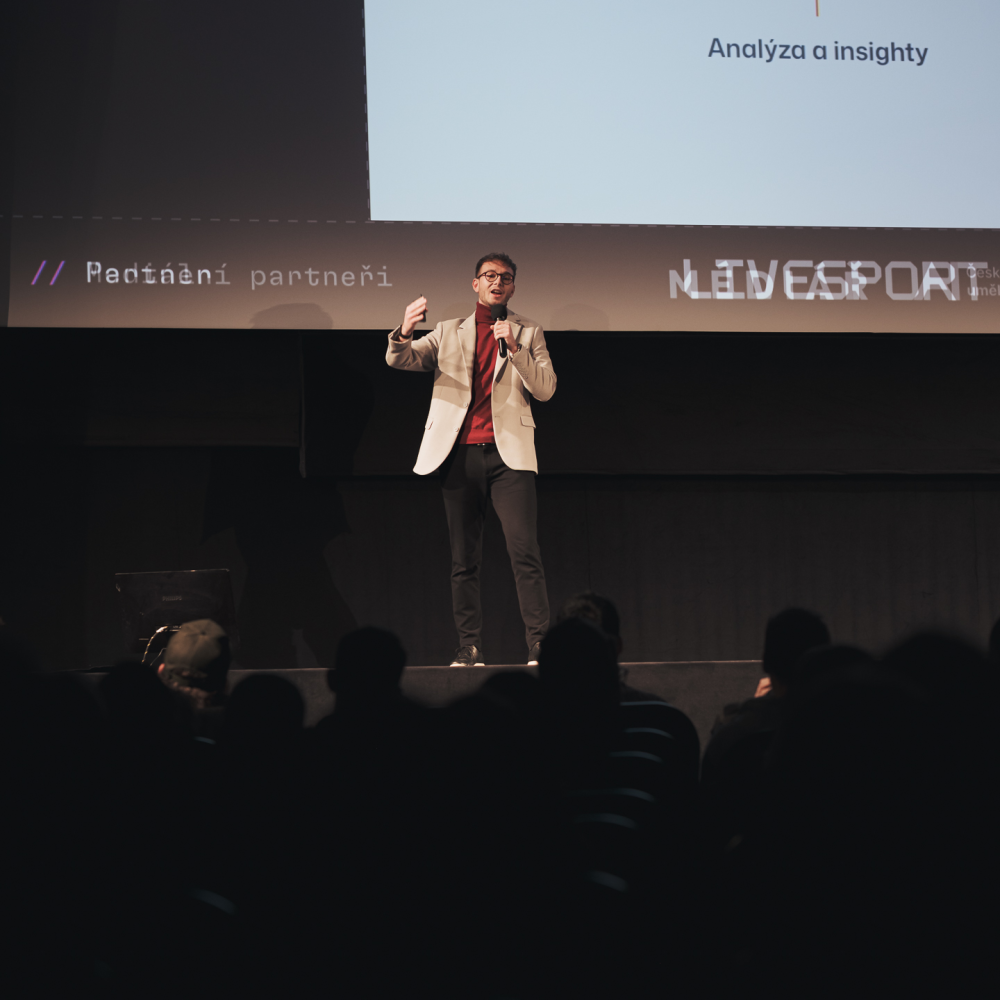
The winners of the evening — Aireen (chronic disease detection from the retina) and Neurona (early Alzheimer’s diagnostics) — deserved their wins. They do the most important work of all: saving and improving lives.
But from a business perspective, as my colleague David Třešňák put it:
Medical AI is now in the “Internet 1995” stage.
We have transformative tech, but:
- infrastructure isn’t ready,
- legislation lags behind,
- ROI requires years of certification, clinical trials, and funding burn.
It’s the purest form of the Long Game. Brave investors and patient teams are required.
For most B2B companies needing impact now, the path lies elsewhere — in Invisible AI and agent systems with fast ROI.
If you’re not a deep-tech health startup, take inspiration from Medical AI’s mindset, not its roadmap.
How to Catch the Rising Wave of Opportunities
AppParade 37 wasn’t just a parade of apps. It was a wake-up call.
Technology has been democratized to the point where things that required 50 developers and millions last year can now be built by a small team with a good LLM.
What to take into your company — whether startup or corporation:
**1. Voice is the future.
Stop designing only for eyes. Design for ears, for context, for hands-free moments.
Ask: How would this work without a screen?**
**2. Invisible AI makes the money.
Don’t chase “magical” AI use cases. Search for boredom, routine, paper stacks, repetitive tasks.
That’s where the money is — and AI shines fastest.**
**3. Prefer agents over dashboards.
Demand software that makes decisions, not just displays data.
If a report doesn’t tell you the next step, it’s a spreadsheet, not a decision tool.**
**4. Build your own Mixture of Experts.
Don’t think of AI as one big brain.
Think of it as a team: data expert, recommendations expert, language expert, risk expert.
Your architecture today determines whether you scale or stall in 2027.**
At MeguMethod, we’re implementing these principles across e-commerce, finance, proptech, and automotive. The biggest difference isn’t “which tech to choose,” but what decisions you’re brave enough to delegate — and how strong the data foundation underneath is.
The companies that win in the next few years won’t be the ones talking about AI — but the ones quietly embedding it into everyday operations, where it actually improves customer experience.
If you’re thinking about how to turn these trends into concrete steps for your business, feel free to reach out. We can sit down, look at your data and processes, and identify the first two or three use cases that make sense.


